Your operation requires regular sanitation protocols customized for unique hazards, processing volumes, allergen management, and inspection schedules, with verifiable documentation validating food safety measures, compliance audits, and public health regulations. The information following give guidance on sanitation program requirements.
Important Highlights
- Brampton sanitation experts maintain restaurants, grocery departments, commissaries, warehouses, bakeries, schools, mobile vendors, and allergen-sensitive operations.
- High-touch surfaces, food-contact equipment, kitchens, floors, drains, restrooms, and storage areas are disinfected using zone-based workflows to avoid cross-contamination.
- Proper chemical concentration, alignment, and exposure duration are validated by certified providers, with finishing logged via swabs, assessments, and remedial documentation.
- Routine, periodic, and cyclical operations distributed by section make up sanitation schedules grounded on risk, output capacity, transitions, releases, and requirements.
- Pick providers with HACCP, public-health, expertise, safety training, preparation, protection, credentials, colour-coded instruments, and audit-ready cleaning paperwork.
Food Safety Cleaning Requirements for Brampton Facilities
Any Brampton facility that manages, stores, prepares, packages, or serves food needs food safety cleaning. You must use it if your establishment falls under health department oversight, food regulations, or HACCP requirements. That requirement covers eateries, dining facilities, food distribution centers, supermarket departments, meat markets, fish counters, corner stores, and commercial kitchens.
You also need proper hygiene cleaning in distribution centers, food processing plants, freezer facilities, commercial bakeries, educational nutrition programs, event spaces, and catering hubs. Temporary and mobile establishments count too, including catering vehicles, market vendors, and seasonal stalls. If your staff prepare raw materials, portion finished foods, warm up meals, or maintain allergen storage, your facility needs recorded sanitation procedures. In Brampton, hygiene isn't discretionary; it's part of statutory, business, and public health compliance.
Which Areas Do Brampton Cleaning Experts Cover?
You need professional cleaners who disinfect frequently contacted areas, kitchen areas, floor surfaces, and restrooms to meet food safety and public health standards. They focus on these spaces because they pose the greatest danger for cross-contamination, slip hazards, and sanitation breaches.
Knowing their service areas enables you to validate your operation's sanitation satisfies required standards and regulations.
Prioritizing High-Touch Surface Disinfection
Brampton janitorial experts prioritize high-touch surface sterilization because these frequently handled surfaces can distribute harmful microorganisms and food particles throughout a establishment. You require a documented schedule for disinfecting frequently touched items like handles, plates, switches, railings, equipment controls, payment terminals, and fridge pulls. Implementing contact point analysis, specialists locate every commonly touched point and determine cleaning schedule
check that cleaning was adequate and document follow-up measures if results come outside required standards
Kitchen Areas, Floor Surfaces, and Bathroom Spaces
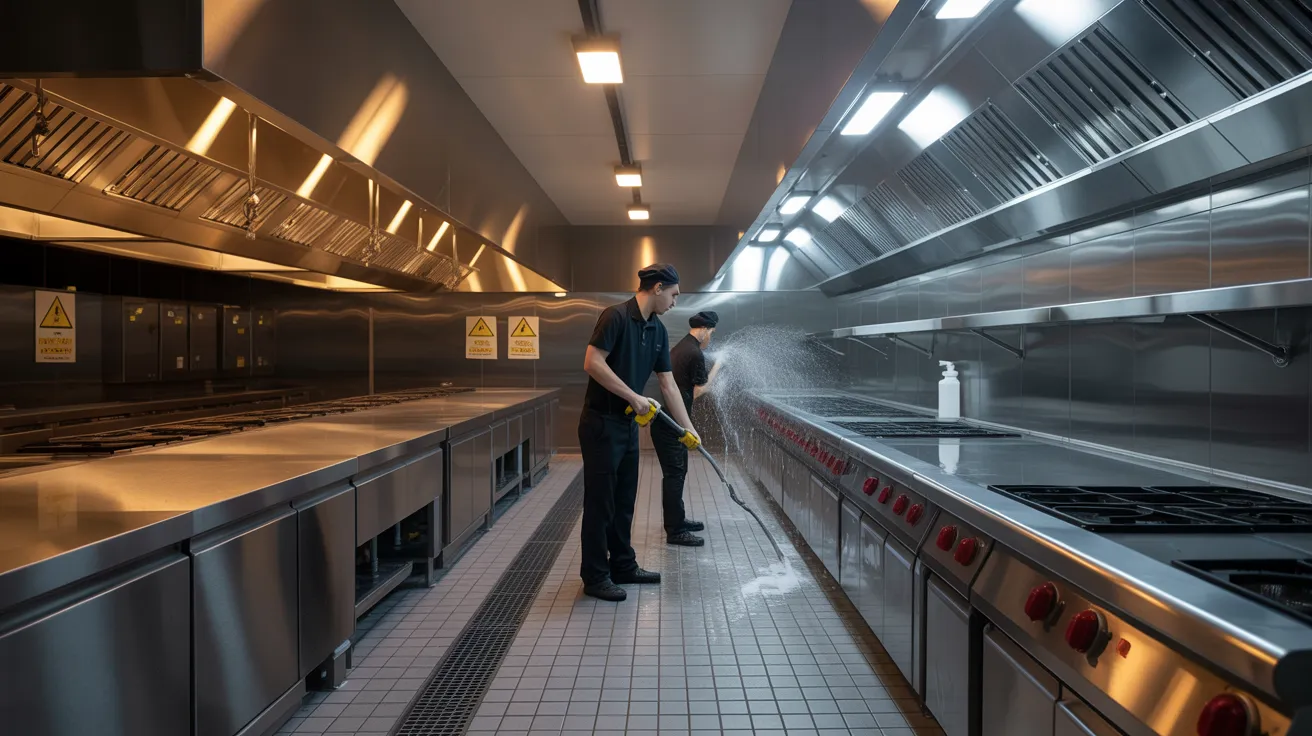
Expect Brampton cleaning experts to focus on kitchens, floors, and restrooms because each area carries unique food safety, slip-and-fall, and sanitation risks. In industrial kitchens, you need degreasing on cook lines, equipment exteriors, drains, prep surfaces, and splash zones to reduce contamination and pest pressure.
Documented floor maintenance is also provided as part of the service.
Restroom cleaning requires disinfecting touch areas, bathroom equipment, stall barriers, supply stations, and bins, replacing items and managing smells. They also maintain restaurant cleaning supply rooms where product storage, sink cleanliness, and drain systems impact daily sanitation standards and worker protection.
The Importance of Food Safety Cleaning in Brampton
Brampton operations demand food-safe cleaning standards to meet compliance obligations and pass audits. You also reduce cross-contamination by cleaning and sanitizing food-contact surfaces, equipment, and high-touch areas correctly. Most importantly, you safeguard community wellness by reducing the chance of food poisoning in your establishment.
Health Code Compliance
Food businesses in Brampton face rigorous sanitary regulations, making food safety cleaning vital to meeting health code requirements, defending patrons, and avoiding enforcement action. You must maintain sanitized food contact points, written maintenance records, proper chemical use, and documented employee protocols that align with municipal and provincial inspection expectations.
Thorough sanitation measures supports allergen management by minimizing residue on common tools plus frequently touched surfaces. If your cleaning standards slip, you risk infractions, corrective directives, public perception damage, and possible interruption to service during additional reviews or enforcement reviews.
Cross-Contamination Prevention
Meeting health code standards also depends on your ability to prevent cross-contamination during daily food handling and cleaning. You must separate raw ingredients from ready-to-eat foods, sanitize prep surfaces between tasks, and keep cleaning products separate from food areas. Clear procedures reduce transfer risks and support consistent compliance during inspections.
You might establish allergen separation to prevent priority allergens from contacting common areas, containers, or machinery. Use dedicated cutting boards, color-coded tools, and rigorous tool identification so staff don't mix items during preparation or service. Mandate handwashing after handling raw meat, seafood, eggs, or allergen-containing products. Swap cleaning rags frequently, and check sanitizer strength with test strips. When you train staff to follow these controls every shift, you create a cleaner, safer operation that matches Brampton's safety requirements daily.
Public Wellness Defense
When sanitation efforts deteriorate, you don't only face inspection setbacks—you raise the likelihood of foodborne illness affecting customers, staff, and the larger Brampton community. You also weaken your role in safeguarding community wellness, especially in busy food facilities where pathogens travel quickly through surfaces, equipment, and touchpoints.
You must establish sanitation protocols that remove contaminants, sanitize properly, and verify outcomes. This requires following exposure times, employing authorized sanitizers, logging schedules, and instructing staff to meet health-unit expectations. These mechanisms support pathogen reduction by decreasing microbes before reaching food or hands. Across Brampton, effective sanitation protects at-risk populations, reduces disease potential, and demonstrates accountability. When you follow standards, you go beyond requirements—you substantially lower hazards and enable safer food service throughout the area.
How Does Cleaning Support Food Safety Compliance?
Maintaining comprehensive cleaning schedules ensures food safety compliance by reducing contamination risks, controlling pathogen growth, and keeping your facility aligned with sanitation requirements under HACCP-based programs and public health regulations. You ensure that food-contact surfaces appear visibly clean and microbiologically controlled, supporting documented preventive controls and inspection readiness.
Conscientious cleaning further reinforces allergen mitigation by extracting residues that can lead to undeclared allergen exposure. When you match verified sanitation methods with safety training, your staff can follow uniform procedures, handle approved chemicals correctly, update records properly, and manage variations before problems worsen. Systematic cleaning facilitates supply chain documentation, establishes remediation efforts, and demonstrates due diligence throughout audits. Additionally, it assists you protect quality assurance, maintain operational adherence, and lower the chances of regulatory actions, product recalls, formal complaints, and preventable safety threats.
How Ought You Arrange Commercial Cleaning Services?
daily standard cleaning
risk factors, production capacity, or regulatory standards are updated
What Should You Look For in Brampton Cleaning Experts?
Screen providers initially by their food hygiene standards—not budget alone. You need to verify that every company meets CFIA, public health, and HACCP standards for your operation. Demand proof of insurance, WHMIS compliance, training records, and management systems. Evaluate technician knowledge of cross-contamination risks, chemical safety, and documented sanitation practices.
You should further examine operational reliability and accountability. Request testimonials from Brampton food businesses, then review response times, corrective action plans, and communication protocols. Validate the company facilitates supplier audits and can supply compliance documentation to regulators or external parties. Confirm equipment is maintained, color-coded implements are applied correctly, and site-specific hazards are identified. A qualified provider ensures regulatory compliance, product quality, and your brand reputation.
Which components are part of a hygiene cleaning program?
Create a documented strategy that makes clear every sanitation task, standard, and responsibility before guide production begins. You should detail cleaning frequencies, approved chemicals, dilution rates, contact times, tools, and verification methods for each zone, surface, and piece of equipment. Incorporate pre-operational inspections, corrective actions, and employee training requirements.
Your program should also cover contamination prevention, garbage management, pest control procedures, and recorded timelines for restrooms, drains, floors, and food-contact areas. Explain how you'll separate raw and ready-to-eat processes, enable ingredient tracking, and maintain accurate allergen labeling through validated cleaning between product changes. You should designate accountability, maintain signed records, and review results against regulatory standards, HACCP controls, and customer requirements. When gaps appear, revise procedures immediately and re-educate staff.
Frequently Posed Questions
Will sanitation providers handle overnight shifts at Brampton facilities?
Yes, you can arrange sanitation coverage to manage overnight shifts in Brampton facilities. You'll coordinate nighttime cleaning around production schedules, access controls, and personnel needs. Services generally map nightshift procedures to minimize interruption, maintain standards, and document completed tasks. You should verify response times, supervision, access protocols, and waste handling before beginning service. If you operate controlled environments, you'll also need documentation that support inspections and internal quality assurance.
Can Brampton cleaning experts manage emergency spill response?
Yes, you can locate several Brampton sanitation experts offering spill containment services. They handle contamination, evaluate risks, contain affected areas, and execute rapid cleanup to minimize risk and prevent disruption. You should confirm timeframes, training credentials, protocols, and procedures. If your facility needs compliance, pick a provider that logs events, follows procedures, and supports audits.
Are plant-based disinfectants appropriate for surfaces contacting food?
Absolutely, natural disinfectants prove to be safe for food-handling equipment when you pick items marked food-safe and meeting regulatory standards. You must validate contact times, dilution ratios, and rinsing needs before use. Plant based formulas reduce harsh chemical exposure, though you should gather proof of efficacy against relevant pathogens. For preserving residue-free areas, adhere to exact manufacturer guidelines and verify the disinfecting agent satisfies food industry regulations.
Will maintenance plans adapt to seasonal production changes?
Yes, you can adjust cleaning schedules for seasonal production changes. You should adjust frequencies, staff levels, cleaning agents, and testing procedures to match operational cycles while maintaining regulatory compliance. You'll lower operational delays by scheduling sanitation around line changes, peak seasons, and usage cycles. You should further modify procedural documents, employee training, and monitoring protocols to account for periodic risks, emerging allergens, or increased soil loads. Periodic assessments keep your plan functional.
Will commercial cleaners train your staff on hygiene best practices?
Absolutely, commercial cleaners regularly deliver staff training on sanitation best practices. Your team gets instruction on correct chemical handling, contact times, cross-contamination prevention, equipment disassembly, and documentation. They generally match guidance with HACCP, GMP, and CFIA or local public health requirements. Many conduct health inspections to ensure adherence, pinpoint weaknesses, and strengthen corrective measures. This helps you maintain consistent procedures, clear audits, and lower contamination dangers consistently.
Final Thoughts
When you partner with Brampton food safety and commercial cleaning specialists, you aren't merely cleaning—you maintain your facility inspection-ready and your protocols compliant. From kitchens to processing floors, every clean surface and maintained area minimizes pest intrusion and prevent costly setbacks. By scheduling service at the right intervals and following a clear cleaning plan, you safeguard employees, patrons, and your brand image. In a tightly regulated environment, clean spaces are essential—they're part of doing business right.